
You’ve been showing up. Posting consistently. Creating content you’re genuinely proud of. And yet — your social media reach keeps shrinking. Fewer eyes, fewer likes, fewer clicks. If you’ve been asking yourself why is my social media reach dropping, you’re not imagining things — and you’re definitely not alone.
Here’s what most people won’t tell you: it’s probably not your content that’s the problem. Something much bigger shifted underneath all of us in 2025 and 2026, and the businesses that don’t adapt are going to keep watching their numbers slide. The good news? Once you understand what actually changed, fixing it is completely doable.
Let’s break down what’s really happening — and what to do about it.
Table of Contents
The Real Reason Your Social Media Reach Is Dropping
If your reach has tanked but your content quality hasn’t changed, the issue isn’t you. It’s the platforms themselves.
Social media in 2026 doesn’t work the way it did even two years ago. Every major platform — Instagram, Facebook, TikTok, LinkedIn, even Pinterest — has fundamentally shifted how content gets distributed. The old model rewarded your followers seeing your posts. The new model? It rewards strangers discovering your content based on their interests.
This shift is what we call the move from “social media” to interest media. And it’s the single biggest reason small business owners are watching their reach numbers free-fall while doing everything they were told to do.
The algorithms no longer prioritize who posted the content. They prioritize what the content is about and whether it matches what a specific user wants to see right now. That means the playbook you built in 2023 or 2024 — the one based on hashtags, posting times, and follower growth — is outdated.
What Changed: The Interest Media Shift Explained
Here’s the short version: platforms make money by keeping people scrolling. And they discovered that showing users content from accounts they don’t follow — but that matches their interests — keeps them on the app longer than showing posts from accounts they already follow.
According to Hootsuite’s social media trends research, content discovery has overtaken social connection as the primary driver of platform engagement. That’s why your 2,000 followers aren’t seeing your posts anymore. The algorithm is busy showing them content from creators and brands they’ve never heard of, because that content matched a signal the algorithm picked up.
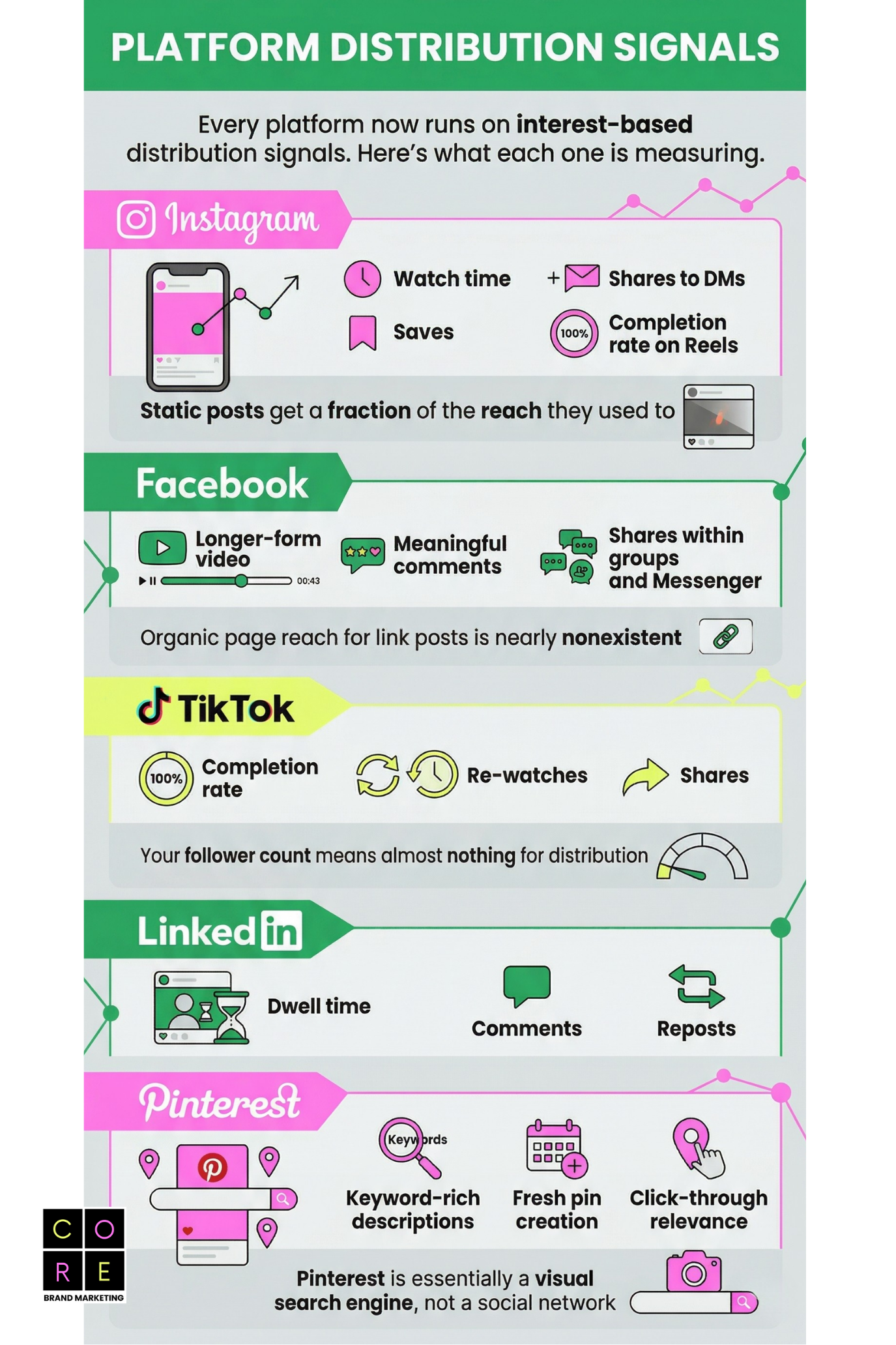
Every platform now runs on interest-based distribution signals. Here’s what each one is measuring:
- Instagram prioritizes watch time, saves, shares to DMs, and completion rate on Reels. Static posts get a fraction of the reach they used to.
- Facebook favors longer-form video, meaningful comments, and shares within groups and Messenger. Organic page reach for link posts is nearly nonexistent.
- TikTok measures completion rate, re-watches, and shares above all else. Your follower count means almost nothing for distribution.
- LinkedIn rewards dwell time — how long someone stops scrolling to read your post — plus comments and reposts.
- Pinterest operates on keyword-rich descriptions, fresh pin creation, and click-through relevance. It’s essentially a visual search engine, not a social network.
If your content strategy isn’t built around these specific signals, your reach will keep dropping no matter how often you post.
7 Proven Ways to Fix Your Declining Social Media Reach
Understanding the shift is step one. Here’s what to actually do about it — seven strategies that work in 2026’s interest media landscape.
1. Lead with Value, Not Branding
The algorithm doesn’t care about your logo or your brand colors in the first three seconds. It cares whether someone stops scrolling. Open every piece of content with a hook that speaks to a specific problem, question, or desire your audience has. Save the branding for later in the post.
2. Create for Discovery, Not Just Your Followers
Stop creating content that only makes sense to people who already know your brand. Think about the stranger who’s never heard of you — what would make them stop, watch, and engage? This is the core mindset shift of interest media. Your content needs to stand on its own without context.
3. Prioritize the Formats Each Platform Rewards
Static image posts on Instagram aren’t going to move the needle anymore. Neither are link posts on Facebook. Each platform has formats it actively pushes into discovery feeds:
- Instagram → Reels (especially under 60 seconds with strong hooks)
- Facebook → native video, carousel posts, and group-shared content
- TikTok → short-form video with text overlays and trending sounds
- LinkedIn → text-based storytelling posts and document carousels
- Pinterest → fresh, vertical pins with keyword-rich descriptions
If you’re repurposing one piece of content identically across every platform, you’re leaving reach on the table.
4. Optimize for the Right Engagement Signals
Not all engagement is created equal anymore. A “like” does almost nothing for your reach in 2026. What moves the needle:
- Saves tell the algorithm your content is worth coming back to
- Shares (especially to DMs and stories) signal that your content is genuinely useful
- Comments with more than four words show real conversation
- Watch time and completion rate on video content are the number-one distribution triggers
Design your content to encourage these deeper actions. Ask a question that requires a real answer. Create a resource worth saving. Say something worth sharing privately.
5. Build an Evergreen Content Engine
Chasing trends is exhausting — and the shelf life of a trending audio or format is measured in days. Instead of spending all your energy on what’s hot this week, build a library of evergreen content that stays relevant and searchable. Blog posts optimized for SEO, Pinterest pins that drive traffic for months, and email sequences that nurture on autopilot are all examples of content that compounds instead of expiring.
This is exactly the philosophy behind outsourced marketing partnerships — building sustainable systems instead of running on the content hamster wheel.
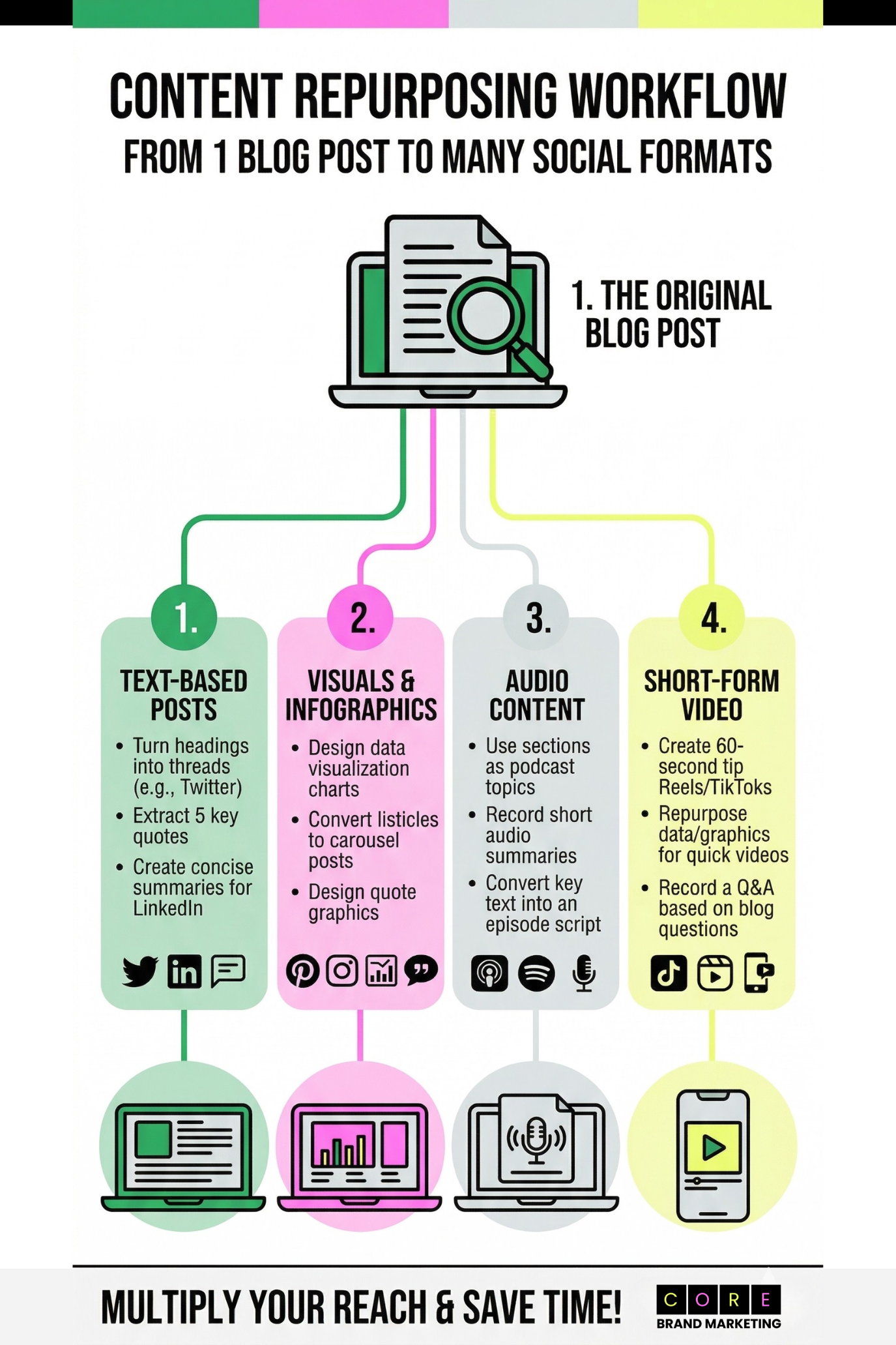
6. Repurpose One Idea Across Multiple Formats
You don’t need more ideas. You need more formats. One solid blog post can become eight or more pieces of platform-native content: a Reel, a carousel, a LinkedIn text post, a Pinterest pin, a TikTok, a newsletter topic, a quote graphic, and a YouTube Short.
The key is adapting each piece to the specific platform’s preferred format and engagement signals — not just copy-pasting the same caption everywhere.
7. Stop Relying on Social Media Alone
This might be the most important fix of all. If your entire marketing strategy lives on social media, you’re building on rented land. Algorithm changes, account restrictions, and platform shifts can wipe out your reach overnight — and you have zero control over it.
The businesses thriving in 2026 are the ones combining social media with owned channels: SEO-driven blog content that brings in organic traffic from Google, email lists that let you reach your audience directly, and lead funnels that convert visitors into subscribers automatically. Social media becomes one piece of a larger strategy — not the whole thing.
Why Posting More Won’t Fix Your Social Media Reach
Here’s a trap a lot of business owners fall into: when reach drops, they assume the answer is posting more. More content, more platforms, more hours spent creating.
But volume isn’t the problem — alignment is. Posting five times a week using a 2023 strategy will get you less reach than posting three times a week using a strategy built for how the algorithms actually work in 2026.
This is where a lot of small business owners hit a wall. You’re already wearing too many hats. Marketing keeps slipping to the bottom of the to-do list. And now you’re being told the rules changed again.
You don’t have to figure all of this out alone. And you definitely don’t have to be on camera every day or become a full-time content creator to get results. There’s a calmer, more sustainable path — one built on strategy and systems instead of hustle and burnout.
What to Do Next If Your Reach Keeps Dropping
If your social media reach is dropping and you’re ready to understand the full picture — not just what changed, but exactly what to do about it on every platform — we put together a free resource that breaks it all down.
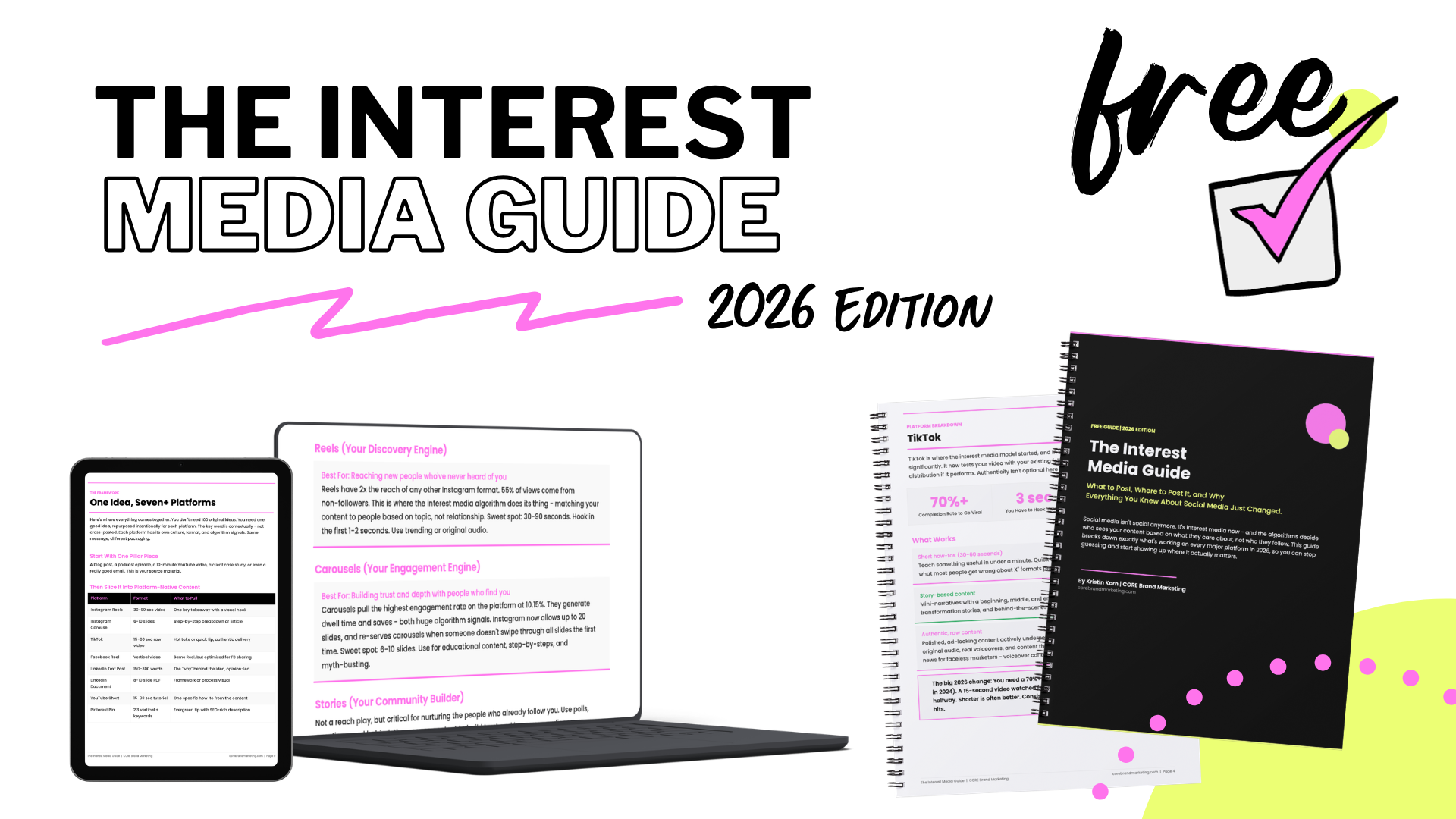
The Interest Media Guide covers the platform-by-platform playbook for 2026: what each algorithm actually rewards, the content formats that get pushed into discovery feeds, the repurposing framework to get more mileage from every idea, and the mistakes that are silently tanking your reach.
It’s free, it’s practical, and it’s built for business owners who want to work smarter — not louder.
Download the Interest Media Guide →
Frequently Asked Questions
Why is my social media reach dropping even though I post every day?
Posting frequency alone doesn’t drive reach in 2026. Platforms now distribute content based on interest signals — watch time, saves, shares, and completion rates — rather than how often you post. If your content doesn’t match the format and engagement signals each platform prioritizes, more posts won’t help. Focus on creating fewer, higher-quality pieces optimized for how each algorithm actually works.
Is social media reach declining for everyone or just small businesses?
It’s happening across the board, but small businesses feel it the most because they typically rely on organic reach without paid amplification. The shift to interest-based distribution means even large accounts with tens of thousands of followers are seeing lower reach on their regular posts. The businesses adapting to the new signals — regardless of size — are the ones recovering their visibility.
Can I fix my social media reach without being on camera?
Absolutely. The interest media shift actually benefits businesses that create value-driven content in any format — not just face-to-camera video. Carousels, text posts, voiceover Reels, keyword-optimized pins, and well-written blog content can all drive strong reach without ever showing your face. This is the foundation of faceless marketing, and it works exceptionally well in 2026.
Should I stop using social media and focus only on SEO?
Not at all — but you should stop relying on social media as your only channel. The strongest marketing strategies in 2026 combine social media with SEO-driven content, email marketing, and lead funnels. That way, when one platform changes its algorithm, your business doesn’t lose its entire audience overnight. Think of social media as one spoke in a larger wheel, not the whole engine.
How long does it take to see reach improve after changing my strategy?
Most businesses start seeing improved engagement signals within two to four weeks of aligning their content with platform-specific best practices. Reach recovery can take a bit longer — typically six to eight weeks — because the algorithms need consistent signals to start distributing your content more broadly. The key is consistency with the right strategy, not just consistency for its own sake.

0 Comments